Foundation piering in Indianapolis costs $1,200–$3,000 per pier, with most settlement repairs using three to eight piers: $4,000–$15,000 total. Piers drive through moisture-cycling glacial till (and, in newer subdivisions, through still-consolidating builder fill) to strata that don't move.
The two ways Indy houses settle, what a pier actually does, and how the count gets set honestly.
Two settlement stories, one metro
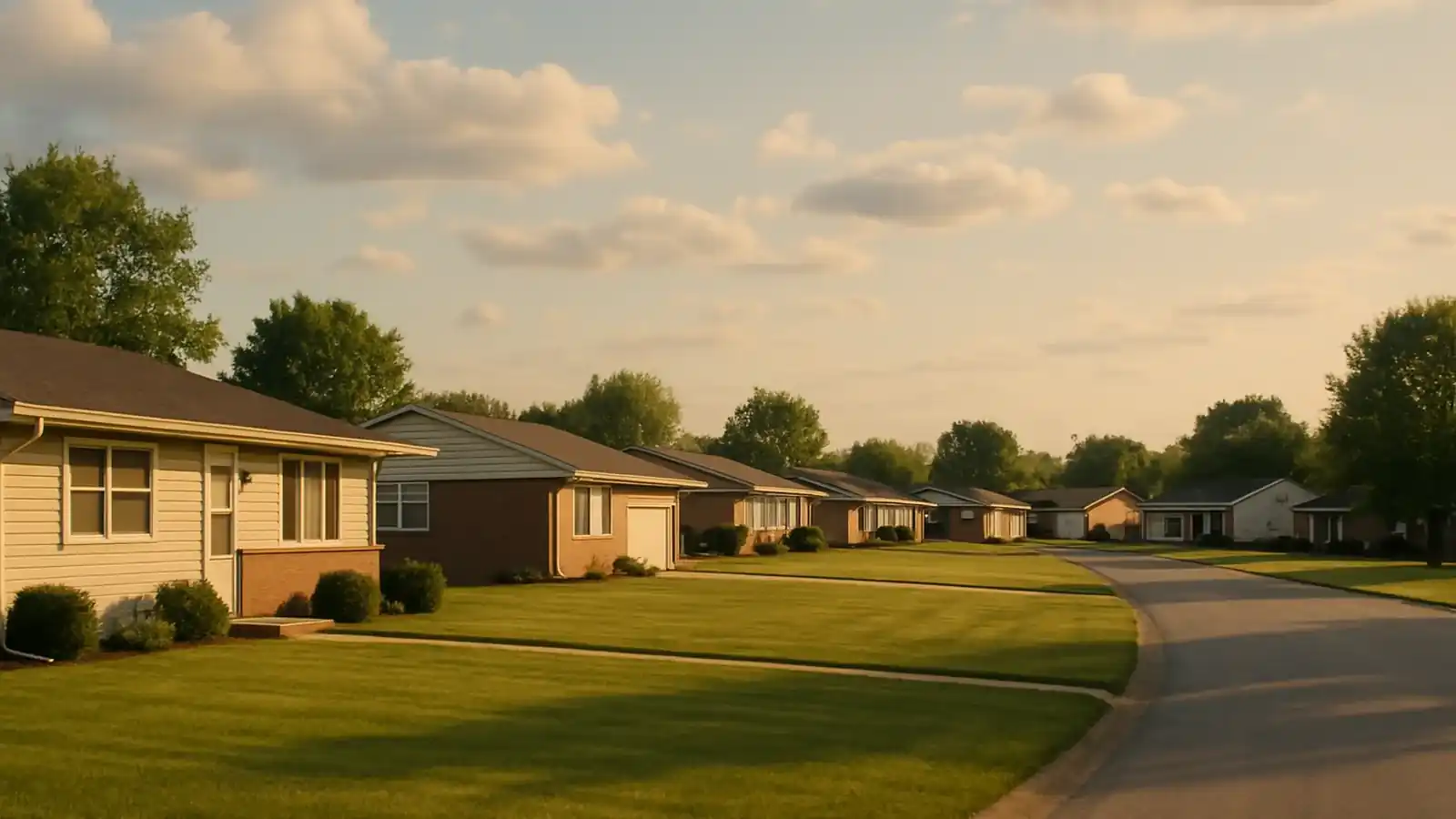
Older Indianapolis settles the classic way: till gains and loses moisture with the seasons, and eighty years of that cycling slowly racks a Speedway bungalow or a Beech Grove cottage. The donut counties settle younger and faster: mass-graded subdivisions put houses on engineered fill that keeps consolidating long after closing, and the first dozen years write diagonal cracks off the garage corners of otherwise-new homes. Different biographies, same physics (soil under load giving ground) and the same permanent answer.
What a pier changes
A steel pier transfers your foundation's weight from the soil that's failing to strata that can't be bothered. Sections drive beneath the footing until refusal; a bracket marries footing to pier; hydraulics move the load. From that day the footing's former soil can swell, shrink, freeze, or keep consolidating: the house no longer subscribes. Piers install from outside through small pits or from inside through the slab, and the disruption reads smaller than homeowners expect.
| System | Drive method | Where it wins in Indy |
|---|---|---|
| Push piers | Pressed to refusal under structure weight | Heavier brick homes, older city stock |
| Helical piers | Screwed to torque-verified capacity | Frame construction, additions, porch columns. Most suburban builds |
Piering as one chapter of the repair
Settlement rarely travels alone in this metro. The wet till that cycled the footing has usually been pressing the basement walls and testing the cracks all along. A good evaluation reads the whole system: floor levels mapped by laser, walls checked for deflection, water path walked outside. If the honest scope is piers plus drainage, or piers now and wall restraint watched, that's what the paper says: sequenced so each fix protects the next.
What moves the price
- Pier count: length of the settled run at 5–8 ft spacing
- Depth to refusal: deep fill pads and low spots drive longer
- Access: open yard vs. interior slab pits vs. tight lot lines
- Lift vs. stabilize: recovering elevation takes more time than locking position
Old movement that's finished gets monitoring, not steel. The measured baseline makes that call defensible.
Driving piers through glacial till: what refusal means here
Indianapolis piering works against a soil the glaciers left dense, clay-rich, and wet: till that holds water near the surface and gives frost something to grip every winter. Piers here drive through that water-holding layer to strata that refuse further advance, and the refusal pressure logged at each pier is the number that matters, because till can feel deceptively firm at depths that still heave and settle with the seasons. Marion County's code frost line sits at 30 inches (36 is the common safety spec), but piering ignores frost math entirely: the pier's job is to carry the house past everything the surface does, freeze or thaw.
Expect two days to a week depending on count and access, a livable house throughout, and a per-pier log in the paperwork. Pre-war homes with full basements usually pier from outside the wall; slab-era suburbs pier at grade with less excavation. Both end the same way: the footing standing on something the winter can't move.
Piering questions, straight answers
How deep do piers drive in Indianapolis?
Through the till and any builder fill until refusal at load-bearing strata: commonly 10 to 25 feet in the metro, verified by hydraulic drive pressure or torque on every pier, not assumed from a chart. Depth past the frost line is the easy part; depth past the moisture-active zone is the point.
What do piers cost in Indy?
$1,200-$3,000 per pier installed. Settled runs typically want three to eight piers at 5-8 foot spacing, so most underpinning jobs land between $4,000 and $15,000. The evaluation counts and maps them before anyone quotes.
My subdivision is only 12 years old. Why is it settling?
Because builder fill compacts on its own schedule. Mass-graded subdivisions in Hamilton and Hendricks County placed engineered pads over cut-and-fill; the fill keeps consolidating for a decade or more, and the corner over the deepest fill drops first. It's a common piering call in the donut counties.
Push or helical piers for my house?
Weight decides. Push piers drive with the structure's own mass: right for two-story brick. Helical piers screw to a verified torque and shine under lighter frame homes, porches, and room additions, which is much of the newer metro stock. Both end at the same place: load off the moving soil.
Will the lift close my drywall cracks?
Frequently. A successful lift walks the foundation back toward original elevation and cracks visibly narrow as it rises. Where finishes or utilities argue against a full lift, the specialist may stabilize in place; ask them to say so up front. Either way the goal is that movement stops, so get that in the contract.
Get an Indianapolis foundation evaluation
Tell us what the house is doing (cracks, a bowing wall, doors out of square, a wet basement) and we'll pass your request on for an evaluation. A local specialist who works in Indianapolis will call you back.