Foundation crack repair in Indianapolis costs $400–$1,500 for injection and reinforcement. Freeze-thaw makes this metro hard on cracks (water enters, freezes, expands ~9%, and pries each one wider) so sealing before winter is the cheapest structural decision an Indy homeowner makes.
Which cracks mean what, how injection actually works, and the monitoring habit worth adopting.
Crack triage, Indianapolis edition
| What you see | What it usually is | What to do |
|---|---|---|
| Thin vertical line, poured wall | Curing shrinkage | Seal it. It's a water route in wet till |
| Diagonal, widening seasonally | Settlement: till cycling or fill consolidating | Measure; consider piering |
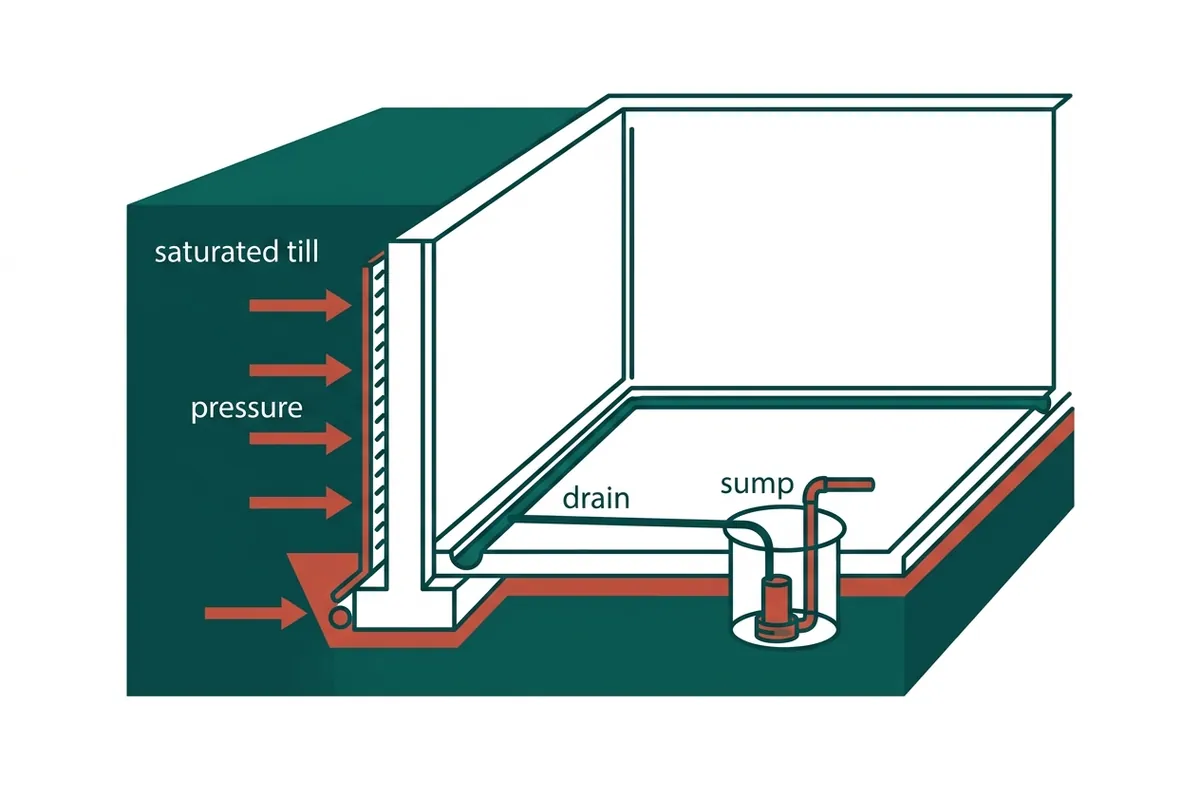
| Horizontal along a block course | Lateral till pressure | Prompt look: wall restraint territory |
| Stair-step in brick veneer | Footing movement telegraphing up | Evaluation before tuckpointing |
How a repair outlasts the winters
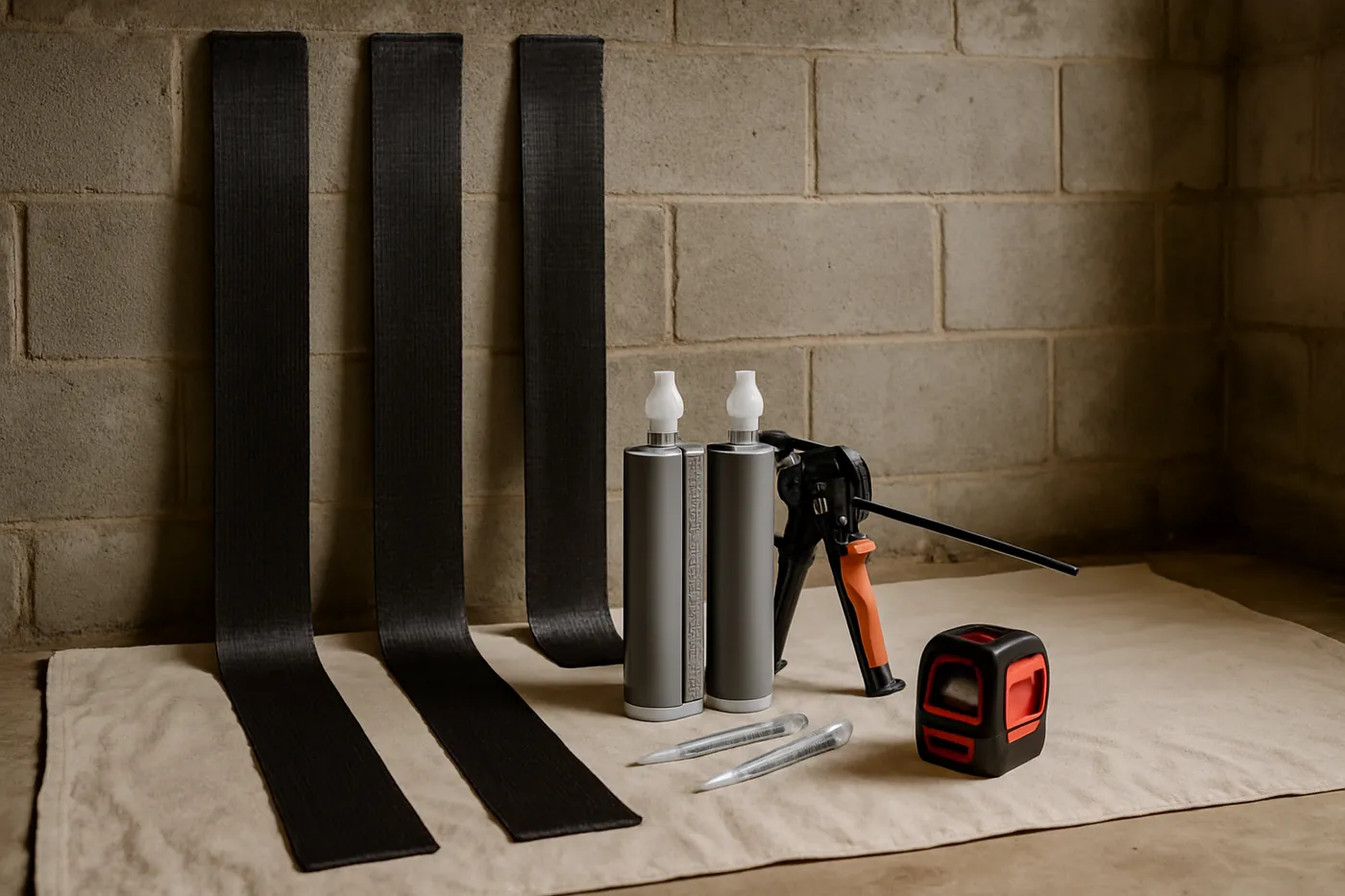
Polyurethane injection handles the wet cracks: it chases water through the full wall thickness, expands into every void, and cures flexible, built for a climate that flexes walls annually. Epoxy injection takes the dormant ones: it welds the crack to strength greater than the surrounding concrete. Cracks with a movement record get carbon fiber staples across the line so the repair holds through future seasons. Surface caulk from a tube does none of this, which is why it peels off every spring alongside its warranty.
When the crack is testimony
A lone sealed crack ends the story. A crack that returns, brings friends, or pairs with a racking door is testimony. The till is moving something, and injection would just silence the witness. That's the moment for the measured evaluation: laser levels, wall deflection, the water walk. Half the time the verdict is genuinely benign, and a good report says so in writing. The other half, you caught the real problem at its cheapest.
Reading Indy's two crack languages
This metro's split housing stock writes cracks in two different languages. The pre-war basements (Irvington, Broad Ripple, the older ring) crack in brick and early block: stair-steps through mortar joints, cracks that have opened and closed seasonally for ninety years. There, the question is trajectory: a dated pencil mark and a season of observation separate "the house breathing" from "the footing moving," and injection is scoped alongside masonry repair. The slab-era suburbs crack in poured concrete and drywall: diagonal lines off door corners, tile telegraphing through, slab-edge separation, movement reports that arrive faster and read cleaner.
Material choice follows the language: flexible polyurethane for wet or seasonally-moving cracks, structural epoxy where an engineer wants load transfer and the cause is corrected, carbon staples across anything with a widening history. Sealing is cheap; sealing the wrong crack twice isn't: the evaluation reads the language first.
Crack questions, straight answers
Why do my foundation cracks grow every winter?
Freeze-thaw runs a wedge factory. Water enters a hairline, freezes, expands about 9%, and pries; the thaw admits more water to a now-wider crack. A dozen cycles per winter compounds, which is why Indy cracks get injected before December, not after.
What does crack repair cost here?
Injections run $400-$800 per crack; add carbon fiber stitching for movement history and you're at $700-$1,500. If the crack is a settlement or wall-pressure symptom, you want to hear that plainly instead of being sold a seasonal patch.
Epoxy or urethane in an Indianapolis wall?
Wet-or-dry decides. Polyurethane foam chases water, expands, and stays flexible through freeze-thaw: the default for leaking cracks here. Epoxy structurally rebinds dormant cracks to full strength. The wrong pick fails at the first hard freeze, so ask for the pick per crack and the reason why.
Are shrinkage cracks in a newer poured wall normal?
Common, yes: curing concrete shrinks and relieves itself in thin vertical cracks, and subdivisions across the metro have them. Normal doesn't mean ignorable: they're water routes in a wet-soil region, so seal them before they teach you about hydrostatic pressure in April.
How do I monitor a crack myself?
Pencil-date each end, measure width at a marked spot, and re-check quarterly plus after the spring melt. Growth in length, width, or family size promotes it from watch-list to evaluation. Better to learn the habit than pay for the panic.
Get an Indianapolis foundation evaluation
Tell us what the house is doing (cracks, a bowing wall, doors out of square, a wet basement) and we'll pass your request on for an evaluation. A local specialist who works in Indianapolis will call you back.