
Exterior foundation waterproofing in Indianapolis seals the wall but requires full-depth excavation; interior perimeter drainage runs $2,500–$8,000 and gives water an exit at the footing. Because glacial till holds water against basement walls, most occupied Indy homes choose interior drainage plus surface routing.
What each buys against till-held water, and how wall repairs change the answer.
Indy’s water table problem, in one paragraph
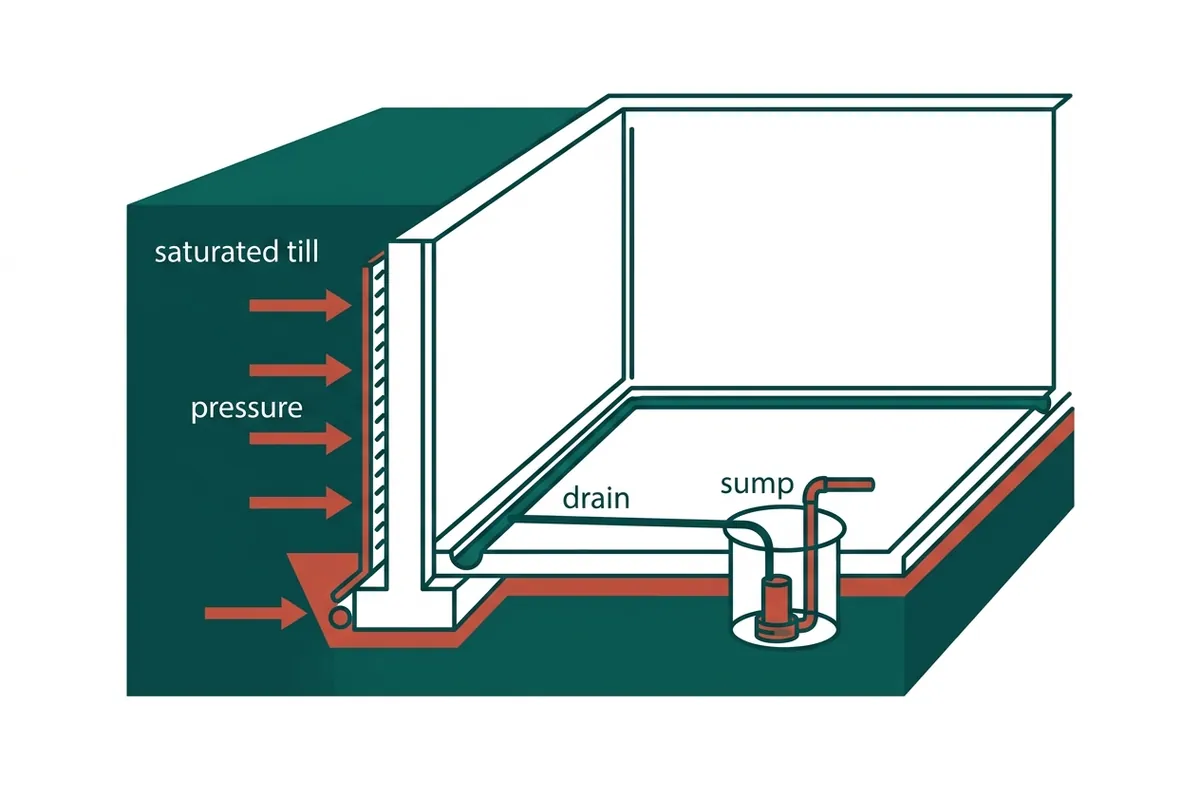
The till under this metro is dense and clay-rich; water that lands doesn’t percolate away, it perches near the surface — against pre-war basement walls in Irvington and Broad Ripple, under slab floors in the suburbs. That standing moisture is the load behind chronic seepage, the softening behind settlement, and the supply for winter’s frost heave. Water management here isn’t a storm accessory; it’s the structural strategy, and the waterproofing page carries the sump and discharge detail this comparison builds on.
The two systems, honestly compared
| Exterior membrane | Interior drainage | |
|---|---|---|
| Promise | Water stopped at the wall face | Water exits at the footing; floor stays dry |
| Indy cost | Per wall — excavation dominates | $2,500–$8,000 full perimeter |
| Disruption | Full-depth dig around an occupied house | Interior slab-edge work, days |
| Frost exposure | Coatings ride backfill that heaves and resettles | Below the frost action entirely |
| Hydrostatic pressure | Wall sealed; wet till still presses | Relieved — the water gets its exit |
| Best case | Wall already open for structural work | Occupied house, chronic seepage, finished basement |
Where waterproofing meets foundation repair
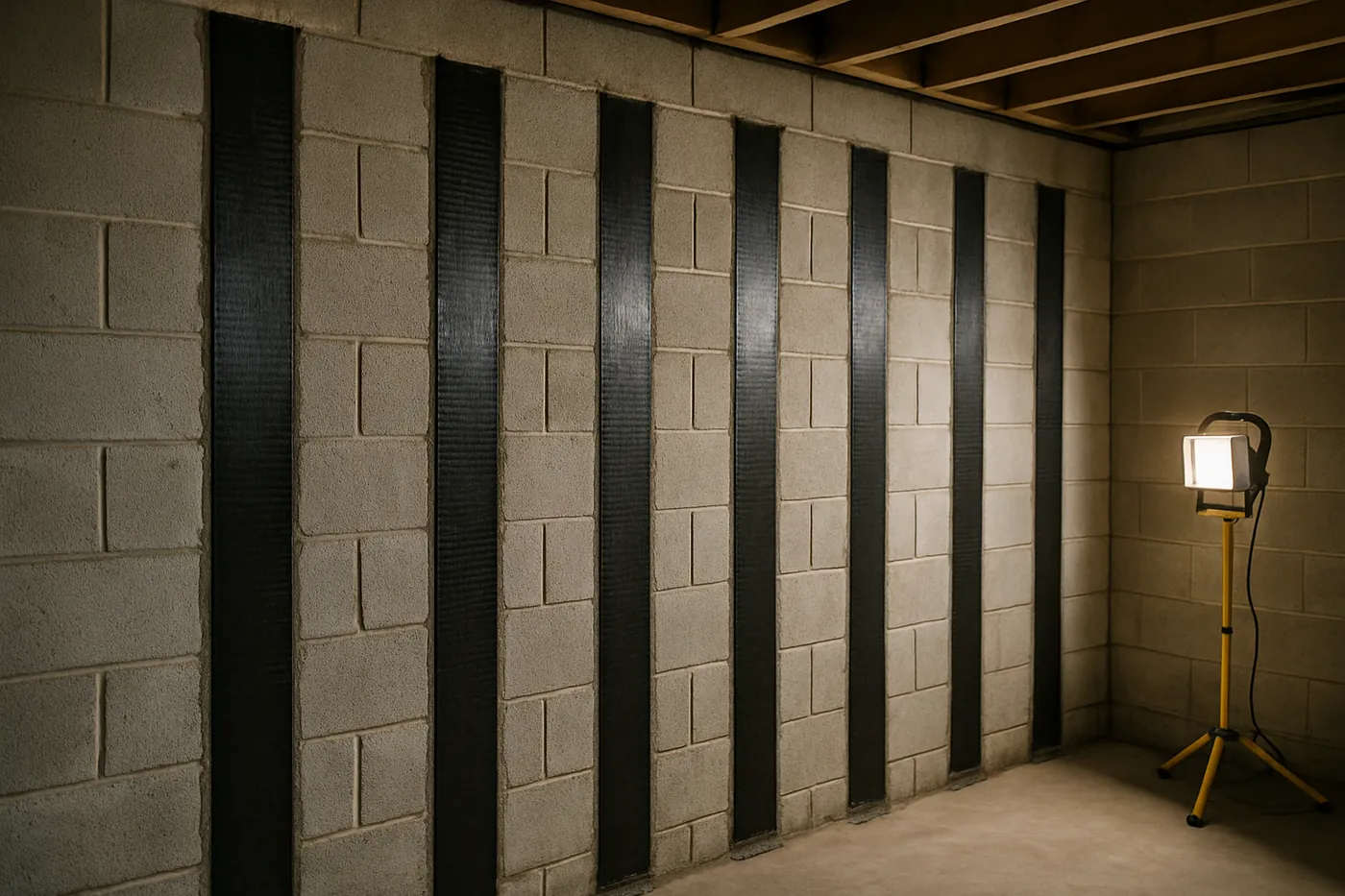
Wet till pushes as well as seeps: pre-war walls here take lateral pressure, and the bowing basement wall is Indy’s companion failure. When restraint work opens the exterior anyway, membrane and a footing drain go in for the cost of materials — the main honest case for exterior waterproofing on an existing house. And when saturation has already moved the structure, the settlement question gets answered first: relevel once, waterproof once, in that order. The cost guide prices both paths line by line.
The sump carries this town
On ground that won’t drain, the sump is the exit — which is why Indy systems get sealed basins, discharge routed well away from the wall, and battery backup as a default recommendation rather than an upsell. A pump that dies in a wet week does more damage here than in any draining-soil market, quietly, without a storm to blame. Surface routing comes first all the same: downspouts, grading, discharge — every gallon kept off the till is a gallon the basement never has to pump.
What the system needs from you afterward
Interior drainage is machinery, and machinery earns a service interval. Twice a year, pour a five-gallon bucket into the sump pit and confirm the float lifts and the pump actually discharges — that single test catches most failures before the water does. Follow the line outside and make sure it still carries water well away instead of returning it to till that won’t take it. Before the first hard freeze, verify the discharge can’t ice shut; a frozen line is how a working pump floods an Indianapolis basement in one cold night. Then the free half of the system: clean gutters, extended downspouts, and grade that falls away for the first ten feet.
Waterproofing questions, straight answers
Why do Indy basements stay damp even without storms?
Because the till never really drains. Dense, clay-rich glacial till holds water near the surface, so a pre-war basement wall spends much of the year against wet soil regardless of the last rain. That's ambient hydrostatic pressure — the reason Indy seepage is a chronic condition to manage rather than a storm event to survive.
Which system fits that better?
Interior drainage, usually. A perimeter channel and sealed sump at $2,500 to $8,000 gives water held against the wall a controlled exit at the footing — and it works from inside, in days, under a finished basement. Exterior membrane seals the wall face but leaves saturated till pressing on it, and buys that seal with a full-depth excavation.
When does exterior waterproofing earn its dig here?
When the wall is already open — a bowing-wall repair with exterior access, an addition, new construction — membrane and footing drain go in for the cost of materials. It's also the right call for a specific wall with a defect a patch can fix. A full-perimeter dig around an occupied pre-war house purely for waterproofing rarely wins.
Does the sump pump matter more in Indianapolis than elsewhere?
It carries more of the load, yes. On till that won't drain, the sump is the basement's only real exit for water — which is why sealed basins, discharge routing away from the foundation, and battery backup get more attention here. A dead pump during a wet week on this soil is how finished basements drown without a drop of storm drama.
What should I fix before buying either system?
The surface water, aggressively — it's the only drainage this ground offers. Downspout extensions, grading that falls away, a discharge route that doesn't recycle water back to the wall. On till, every gallon kept away is a gallon the soil never holds against you; a share of Indy seepage calls end at the gutters, and every remaining system gets smaller.
Get a free Indianapolis foundation evaluation
Tell us what the house is doing — cracks, a bowing wall, doors out of square, a wet basement — and we'll schedule an evaluation with photos and crack measurements. We reply the same business day.