
Most Indianapolis foundation repair is not covered by homeowners insurance: policies exclude earth movement, and saturation-driven till settlement reads as exactly that. The live exceptions are sudden water discharge — a burst line — and, with an endorsement, sump backup. Excluded repairs run $4,000–$15,000.
The exclusion, the sump-endorsement question Indy should ask, and the file to build.
The earth-movement exclusion, plainly
Standard homeowners policies exclude damage from settling, shrinking, bulging, or expanding soil. On Indy’s till the mechanism is saturation rather than drought, but the policy language doesn’t care — the softening that settles footings, the pressure that bows pre-war walls, and the frost churn that works cracks wider all read as excluded earth movement. Endorsements and wordings vary; the authoritative text is your own policy, and this page is a contractor’s field notes, not coverage advice.
The endorsement question this metro should ask
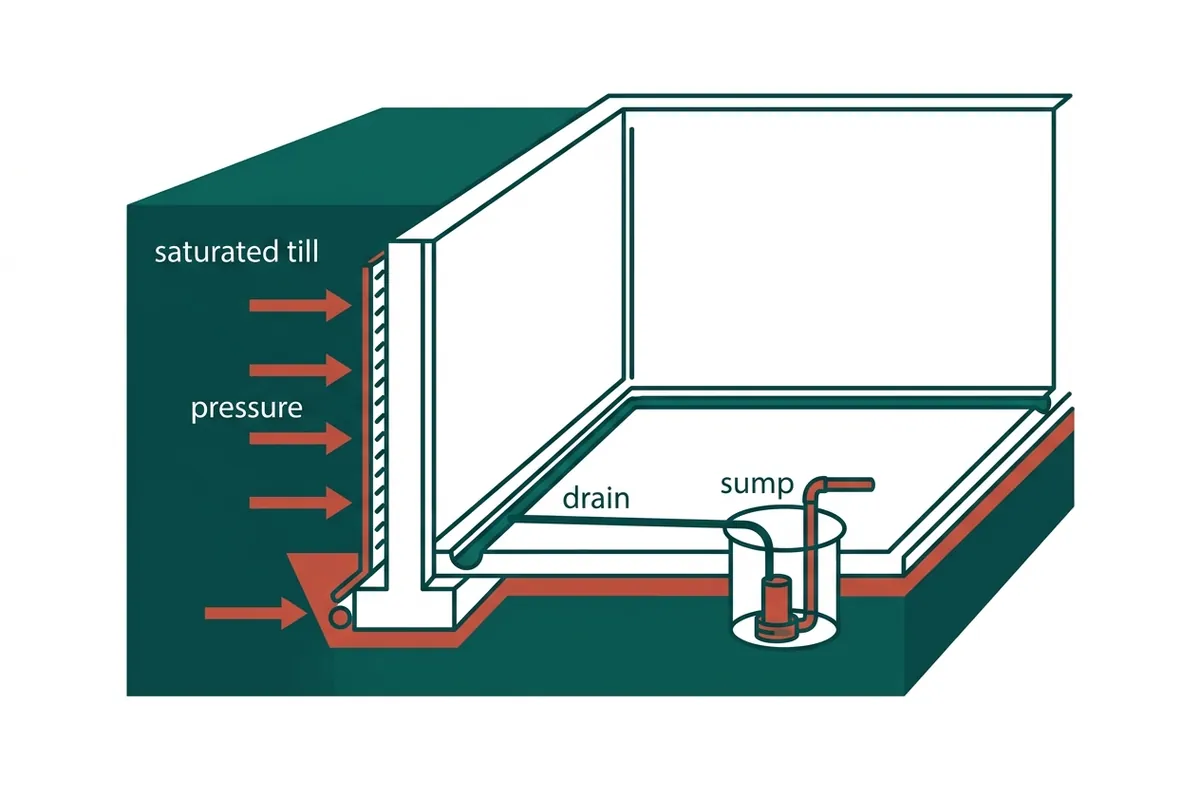
Because till-held water makes the sump the basement’s only exit, the water-backup endorsement matters more in Indianapolis than in draining-soil markets. Standard policies exclude water that backs up through drains or overflows a sump; the endorsement buys that coverage back, typically cheaply. It covers the water damage — the flooring, the drywall — not excluded earth movement, but on a finished-basement house that depends on its pump, it’s the difference between a bad week and a five-figure one. Check your declarations page for it now, not during the wet week.
Covered or excluded — the usual verdicts
| What happened | Usual outcome |
|---|---|
| Saturation settlement, till softening | Excluded — earth movement |
| Wet till bowing a basement wall | Excluded — earth movement |
| Frozen line bursts; soil moves the foundation | Commonly covered — sudden discharge |
| Sump fails; basement floods | Covered only with water-backup endorsement |
| Slow leak discovered after years | Usually excluded — not sudden |
| Surface flooding | Homeowners: excluded. NFIP territory |
Build the file before you call
- Photograph the event — the burst line, the standing water, dates visible, before the plumber’s repair tidies the scene.
- Written diagnosis naming the failure sudden — freeze-burst, not wear.
- Measure the movement now — elevations and crack widths; our free evaluation documents both, yours regardless of filing.
- Contested causation — “that’s just settling” — is where an independent engineer’s opinion earns its fee.
When the answer is no
Most Indy foundation work is self-paid, which is why every range on this site is public. The cost guide itemizes what drives each number, and a per-line scope means stabilizing now and scheduling the rest without re-diagnosing anything.
If the denial letter comes back
A denial is a position, not a verdict. Ask the carrier in writing for the exact policy language it relied on, because “earth movement” cited against a plumbing-discharge claim is the most reversible mistake adjusters make. A stamped engineer’s causation letter naming the covered peril and tying it to the damage is what reverses it. Keep the categories straight while you argue: sump backup needs its endorsement, surface flooding is NFIP territory, and settlement from saturated till is excluded almost everywhere. If the carrier still won’t engage, the Indiana Department of Insurance takes consumer complaints — and your policy’s suit-limitation clause is running the whole time.
Insurance questions, straight answers
Does homeowners insurance cover foundation settling in Indiana?
Almost never. Standard policies exclude earth movement — settling, shrinking, expanding soil — however gradual and however well-maintained the house. Indy's saturation-driven till settlement reads as excluded earth movement in policy language, same as drought-clay damage elsewhere. Your own policy's exclusions section carries the controlling words.
Is water damage from a failed sump pump covered?
Usually only with a specific endorsement. Standard policies exclude water that backs up through sewers, drains, or overflows from a sump — the water-backup endorsement exists precisely to buy that coverage back, and on till that depends on its sump, it's one of the most relevant endorsements an Indy homeowner can check for. Read for it before the wet week, not during.
What's the exception that actually pays here?
Sudden accidental water discharge — a burst supply line, a failed water heater — that saturates or washes out soil and moves the foundation. The discharge is a covered peril on most policies, and foundation damage flowing directly from it commonly rides along. Indiana winters keep the freeze-burst version common. Sudden is the test; chronic seepage fails it.
What should I document before repairs erase the evidence?
The event and the movement, dated: photos of the failed line and standing water, the plumber's written diagnosis naming it sudden, the water bill spike, and measured elevations and crack widths taken promptly. Our free evaluation produces the measurement half, yours whether or not you file. Contested causation is engineer territory.
What do excluded repairs cost out of pocket?
What they cost anyone: most full repairs $4,000-$15,000, piers $1,200-$3,000 each, wall restraint $2,500-$10,000, crack injection $400-$800, interior drainage $2,500-$8,000. A per-line written scope lets you stage the work — stabilize now, cosmetics later — which is how most self-paying homeowners here sequence it.
Get a free Indianapolis foundation evaluation
Tell us what the house is doing — cracks, a bowing wall, doors out of square, a wet basement — and we'll schedule an evaluation with photos and crack measurements. We reply the same business day.